Los Angeles Rams era • Professional beginning, interruption, return and rise
Rams Years Room • 1953–1958 Association
Professional Beginning and Rise
Frank Fuller entered the Rams as a versatile Kentucky lineman, lost time to military service and a major preseason injury, then returned to become a regular defensive tackle, praised pass rusher and first-string veteran before the 1959 Ollie Matson trade sent him to Chicago.
In This Room11 sections
Back to room entrance ↑Warm panels — exhibit storyCool panels — evidence, sources & boundaries
Rams at a Glance
Six Years of Association — Four Documented Playing Seasons
The Rams record is easier to understand when association and league seasons are kept separate. Frank joined Los Angeles in 1953, spent time in military service, lost 1956 to injury, and then returned for his strongest Rams stretch.
Career Development
From Rookie Projection to First-String Veteran
View the Evidence — Rams playing chronology
ConfirmedFollow this evidence in the archive →
Source basis
Los Angeles Rams team publications and historical rosters
What it supports
The record supports playing seasons in 1953, 1955, 1957 and 1958, with military service and a 1956 injury interrupting the sequence.
Boundary
Rams association from 1953–58 should not be presented as six uninterrupted regular seasons played.
1
1952 Draft • 1953 Arrival
A Kentucky Lineman Enters the NFL
The 1953 Rams biography listed Frank at 6-foot-4 and 235 pounds, noted his DuBois and Kentucky background, and projected him for defensive tackle and offensive center. Los Angeles had selected him in the 26th round of the 1952 professional draft.
Los Angeles Rams roster/profile • 1953 • page 41
2
1953
Outstanding Rookie Defensive Tackle
A later Rams profile looked back on Frank’s first season by describing him as an outstanding defensive tackle in his rookie year. That defensive identity became the foundation of his professional career.
Los Angeles Rams player profile • 1957
3
1954–1955
Military Service Interrupts the Career
A 1954 Rams prospectus said Frank and Bob Fry would be missing, and the 1958 Rams profile later explained that Frank spent two years in military service. The career record shows Frank back with Los Angeles for the 1955 season.
Los Angeles Rams prospectus • 1954; Rams player profile • 1958
4
1956
Defensive End Experiment — Then a Broken Leg
With a vacancy at defensive end, Rams material moved Frank there alongside veteran Paul Miller as a first-stringer. But a broken leg in the fifth preseason game cost him the entire league season.
The Squad • 1956; Los Angeles Rams player profile • 1957
5
1957
Back at Defensive Tackle
Frank returned to his natural professional role. The Rams described him as one of the finest all-around players on the squad, a great pass rusher and a spirited player. An August exhibition report also credited him with recovering a fumble that set up the next Rams touchdown.
Los Angeles Rams player profile • 1957; Independent Press-Telegram • August 11, 1957
6
1958
Regular Defensive Tackle and Pass-Rush Reputation
The 1958 Rams profile said Frank had been established as a regular defensive tackle the previous season. It singled out a late Green Bay performance as exceptional pass rushing that drew praise from multiple sides of the game.
Los Angeles Rams player profile • 1958 • page 13
7
March 1959
The Ollie Matson Trade Ends the Rams Chapter
Contemporary trade coverage identified Frank as a defensive tackle and one of four first-string veterans sent from Los Angeles to the Chicago Cardinals in the Ollie Matson deal.
Monroe Morning World • March 1, 1959
Rams Arc — Rookie to Trade
1953 — RookieProfessional beginning with Los Angeles.
Army + InjuryService interruption followed by the lost 1956 season.
1957–1959 — RiseReturn, pass-rush reputation and first-string status before the trade.
Position Journey
A Professional Version of the Same Versatility
Defensive Tackle + Offensive Center
The rookie biography projected Frank for both sides of the interior line, carrying his Kentucky versatility into professional football.
First-String Defensive End
Rams material moved Frank outside to defensive end beside Paul Miller and said he had the size and potential to become one of the league’s finer players at the spot.
Regular Defensive Tackle
After the injury, Frank returned to defensive tackle and established the position that defined the rest of his professional career.
Position Labels Are Date-Specific
Defensive tackle, offensive center and defensive end are all source-supported, but they belong to different moments and should not be flattened into one timeless listing.
Evidence / Verification
Game Impact
Two Rams Moments Preserved in the Evidence
Fumble Recovery Sets Up the Next Touchdown
Frank recovered an Eagle Rock fumble at the All-Star 35-yard line, and the report said the play set the stage for the Rams’ next touchdown. This remains labeled exhibition evidence.
“Phenomenal” Pass-Rush Performance
The 1958 Rams profile looked back on Frank’s Green Bay pass rush as a standout performance that drew raves from the press, teammates, opponents and coaches. No individual sack total is supplied.
Wrestling Crossover
Kentucky Colonel → The Battering Ram
The Rams years intersect with Frank’s professional wrestling identity. A 1958 Associated Press report connected that work to his DuBois background, noted earlier “Kentucky Colonel” billing and introduced “The Battering Ram.” This room marks the crossover without retelling the complete wrestling chapter.
Primary treatment — Wrestling
Follow the schoolboy-to-professional wrestling chronology, billing changes and evidence boundaries.
Open Wrestling Journey →Primary treatment — Frank’s direct words
Frank’s public comment about Leo Nomellini is preserved once in the Voices collection.
Hear Frank’s wrestling voice →Press Story Preview
What the Rams Left Behind When Frank Was Traded
Post-trade coverage makes clear that Frank’s absence was noticed in Los Angeles and that writers and players remembered his aggressive line play. The Rams Room keeps that conclusion; the Press Story owns the individual descriptions and quotations.
Primary treatment — Press Story
See the contemporary “two good tackles,” “virtually indispensable,” and line-charge evidence in its newspaper context.
Open the full Rams press treatment →Rams Pass-Rush IdentityRams-era material repeatedly emphasizes Frank’s disruptive line play, including a 1958 profile describing an exceptional Green Bay pass-rush performance. The Press Story keeps the exact reputation language and source boundaries.
Visual Archive
Frank in the Rams Years
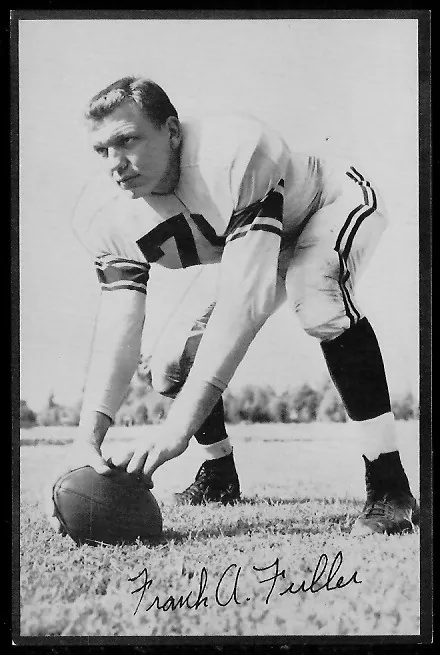
Professional Beginning
1953 Rams-Era Line Stance
An early professional image that anchors the beginning of Frank’s NFL chapter.
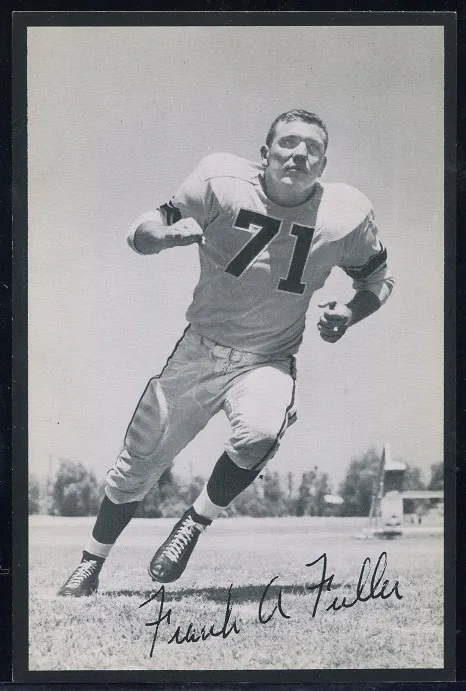
Return and Rise
1957 Rams-Era Running Pose
A later Rams image from the period when team material described Frank as a regular defensive tackle and strong pass rusher.
Rams Departure
First-String Status Before the Chicago Move
The Ollie Matson trade is the transaction that ends Frank’s Rams chapter and begins his Chicago Cardinals chapter.
March 1959 coverage explicitly identified Frank as a defensive tackle and included him among four first-string Rams veterans sent to Chicago. Surviving reports describe the overall package differently, so this room does not force those source-specific totals into one universal count.
Continue the chronologyContinue to Cardinals Years →
For post-trade reputationSee how the press described what Los Angeles lost →
Evidence / Verification
Reading the Record
What the Rams Evidence Does — and Does Not — Prove
Association versus seasons: “1953–1958” describes the Rams association range; documented NFL playing seasons are 1953, 1955, 1957 and 1958.
1954: Rams material and later team biography support a military-service interruption.
1956: the team planned to use Frank as a first-string defensive end, but the broken leg in the fifth preseason game cost him the league season.
1957 recovery: the fumble recovery shown here occurred in an exhibition game, not the regular season.
Green Bay: the Rams profile gives strong pass-rush praise but no sack total or play-by-play statistics.
Wrestling: the January 1958 article proves the billing names and Frank’s desire to face Leo Nomellini, but that page alone does not prove the match happened.
Press praise: “virtually indispensable” and similar language are reputation evidence, not formal selected honors.
Evidence / Verification
Featured Source Trail
Key Sources Behind This Room
The public page summarizes the record. Full transcriptions, duplicate controls and source-mapping work remain in the private Research Desk and master archive.
1953 Player Biography
DuBois/Kentucky background, defensive tackle and offensive center projection, and 26th-round 1952 draft selection.
1954 Prospectus
Team-side confirmation that Frank was missing during the military-service interruption.
1956 Roster and Squad Assessment
No. 71, 6-foot-4, 243 pounds, and the move to defensive end beside Paul Miller.
1957 Player Profile
Broken-leg chronology, return to defensive tackle, rookie retrospective, and pass-rush reputation.
August 11, 1957 — Exhibition Recovery
Direct game-impact evidence for the fumble recovery that set up the next Rams touchdown.
1958 Player Profile
Military/injury context, regular defensive-tackle status, Green Bay pass-rush praise and The Battering Ram billing.
January 30, 1958 — Wrestling
Kentucky Colonel, The Battering Ram, DuBois wrestling roots and Frank’s Leo Nomellini challenge.
March 1, 1959 — Ollie Matson Trade
First-string veteran defensive-tackle status at the point of departure.
Post-Trade Reputation
“Two good tackles,” “virtually indispensable,” and player testimony about Frank’s charge.
Continue Exploring