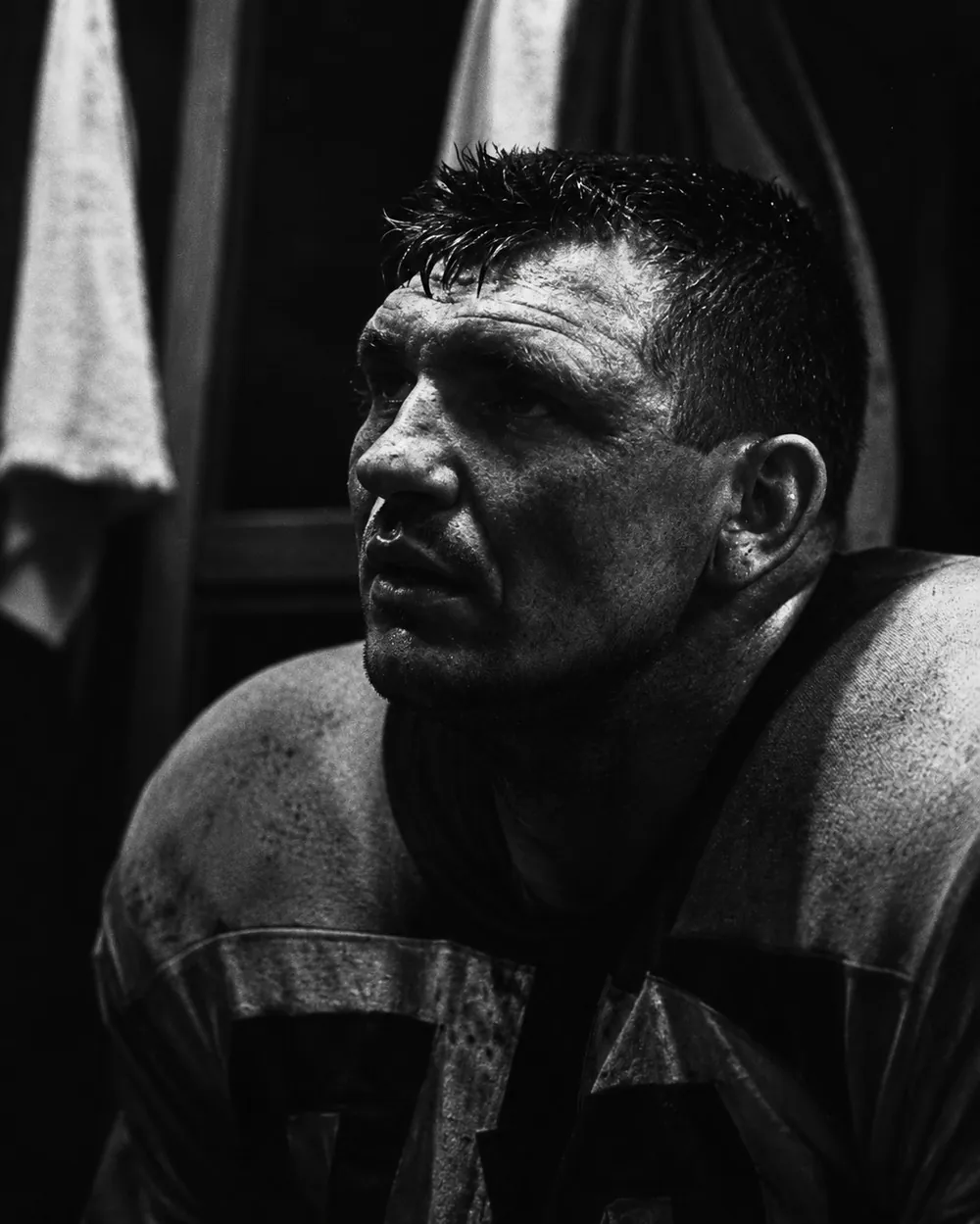
1961 transition-era portrait — contemporary coverage from this period already documented Frank’s insurance, real-estate and coaching ambitions alongside football.
Life After Football — Business, Coaching and Retirement
Building a Future Beyond the Field
Frank Fuller’s life beyond football did not begin only after his final NFL game. By 1960 and 1961, while still a veteran defensive lineman, newspapers were already documenting insurance work in Los Angeles, expanding real-estate interests, Fuller Development Corporation, and an interest in coaching. A decade later, Associated Press coverage preserved his perspective on retirement, employment, education and the value of life beyond professional sports.
The Transition Started Before His Playing Career Ended
The strongest surviving evidence does not support one neat retirement-day story. Instead, it shows Frank building parallel interests while he was still playing and then appearing later in national coverage about retired athletes and post-sports employment.
1960Insurance business documented
1961Real-estate development documented
1963Final documented NFL season
1973Retirement and employment commentary
Parallel Tracks — The Transition Started Early
NFL CareerProfessional football remained active while Frank was already building interests beyond the field.
Business Development1960–1961 coverage documents insurance, real estate and Fuller Development Corporation.
Coaching Interest1961 reporting preserves Frank’s interest in coaching without treating that interest as documented employment.
Retirement Commentary1973 Associated Press coverage preserves his later perspective on work and life after sports.
Business — Los Angeles
Insurance, Real Estate and Fuller Development Corporation
View the Evidence — Business activity while still playing
Confirmed
Source basis
St. Louis Post-Dispatch, July 25, 1961
What it supports
Frank discussed insurance income and expanding into real-estate development; the feature identified Fuller Development Corporation in Los Angeles.
Boundary
The article supports the business activity described in the feature, not every later corporate detail or financial result.
After the broken leg that ended his 1960 Cardinals season, the St. Louis Post-Dispatch reported that Frank returned to his insurance business in Los Angeles. The source establishes the business connection but does not identify the exact company structure or whether every part of the operation was personally owned by him.
July 1961
Insurance — Residual Income
By July 1961, Frank described the insurance side of his work as largely residual income. That wording shows a business that had become established enough for him to discuss income continuing beyond daily football activity.
July 1961
Real-Estate Development
The same feature documented Frank expanding into real estate. Rather than assigning him a modern occupational title, the exhibit preserves the language he used to describe that transition.
1961
Fuller Development Corporation
Robert Morrison’s July 25 feature identified Frank as the head of Fuller Development Corporation of Los Angeles. That makes the company an important documented part of his transition-era business identity.
Claim boundary: the surviving article identifies the company and Frank’s role, but the public exhibit does not invent incorporation dates, ownership percentages, project lists, addresses or financial results that the source does not provide.
Primary treatment — Frank’s direct words
This room explains what the business evidence means in Frank’s life. The verbatim 1961 insurance and development quotations are preserved once in Voices of Frank.
Football Was Still Part of His Plans — Just in a Different Role
July 6, 1961
Coaching Ambition
While discussing his work in insurance and real estate, Frank also spoke about coaching. The surviving quotation is useful because it shows real interest without proving that he had accepted, pursued or later held a specific coaching job.
July 25, 1961
Business Ambition — With Humor
Frank joked that a major business venture could eventually leave him in a very different relationship with professional football.
Why this matters: these 1961 interviews show that Frank was not waiting until retirement to think about what came next. Business, development and coaching were already part of the way he described his future while he remained an active player.
Primary treatment — Frank’s direct words
The coaching and business-humor quotations are collected in Voices of Frank; this room keeps their place in the transition beyond playing.
Frank’s documented professional football sequence ends with the Philadelphia Eagles in 1963. Eagles records list him in five games, and October newspaper reports say a broken leg put him out for the season.
Important boundary: the exhibit treats 1963 as Frank’s final documented NFL season. It does not claim that the injury itself was a formal retirement announcement or assign an exact retirement date that the surviving sources do not establish.
A Former Player Talking About What Comes After Sports
Ten years after Frank’s final documented NFL season, an Associated Press feature family placed him in a broader discussion about athletes, work and retirement.
Aug. 2, 1973
Athlete Connections and Employment
The Sedalia and Dixon printings of the same Associated Press feature preserve one Frank quotation about the social and professional value attached to association with recognizable athletes.
Aug. 1, 1973
Education and Broader Exposure
A distinct Andy Lippman Associated Press item preserved Frank commenting on college education and the broader exposure professional football players could have before entering the professional game.
Evidence boundary: this wording does not prove Frank personally earned a University of Kentucky degree. The source does not provide his major, graduation date or diploma status.
Primary treatment — 1973 quotations
The complete surviving retirement and education quotations, with publication metadata, live in Voices of Frank. This room keeps their post-career meaning and the degree-status evidence boundary.
Why the 1973 commentary mattersThe later Associated Press material preserves Frank speaking as a former professional athlete about employment and life after sports. The exhibit keeps those remarks separate from claims the sources do not prove, including degree completion.
What the Evidence Shows
Businessman, Would-Be Coach and Retired Athlete — Without Inventing the Missing Years
Directly Supported
Insurance work in Los Angeles; real-estate expansion; head of Fuller Development Corporation; interest in coaching; 1961 business ambition; 1963 as his final documented NFL season; and direct 1973 commentary about retirement/employment and education/exposure.
Not Established by the Current Record
An exact formal retirement date; a complete post-1963 job history; every Fuller Development Corporation project; later coaching employment; a Kentucky graduation date; or whether Frank personally used a formal player-association job-placement program.
Evidence / Verification
Evidence Trail
Sources Behind the Life After Football Room
St. Louis Post-Dispatch • Nov. 27, 1960
Insurance Business After the 1960 Injury
Reports that Frank returned to his insurance business in Los Angeles after the season-ending fracture.
St. Louis Post-Dispatch • July 6, 1961
“Fuller Enthusiasm”
Documents insurance and real-estate interests, coaching ambition, injury recovery and Frank’s transition thinking while still an active player.
St. Louis Post-Dispatch • July 25, 1961
“Big Business Men Norton, Fuller…”
Identifies Fuller Development Corporation and preserves Frank’s own description of insurance residual income, real-estate development and business ambition.
Associated Press • Aug. 1–2, 1973
Retirement, Employment and Education
Andy Lippman’s AP feature family preserves two distinct Frank quotations. Duplicate newspaper printings of the retirement quote remain separate source copies but not separate quotations.
Continue Exploring
Connect Frank’s Life Beyond Football to the Rest of the Exhibit