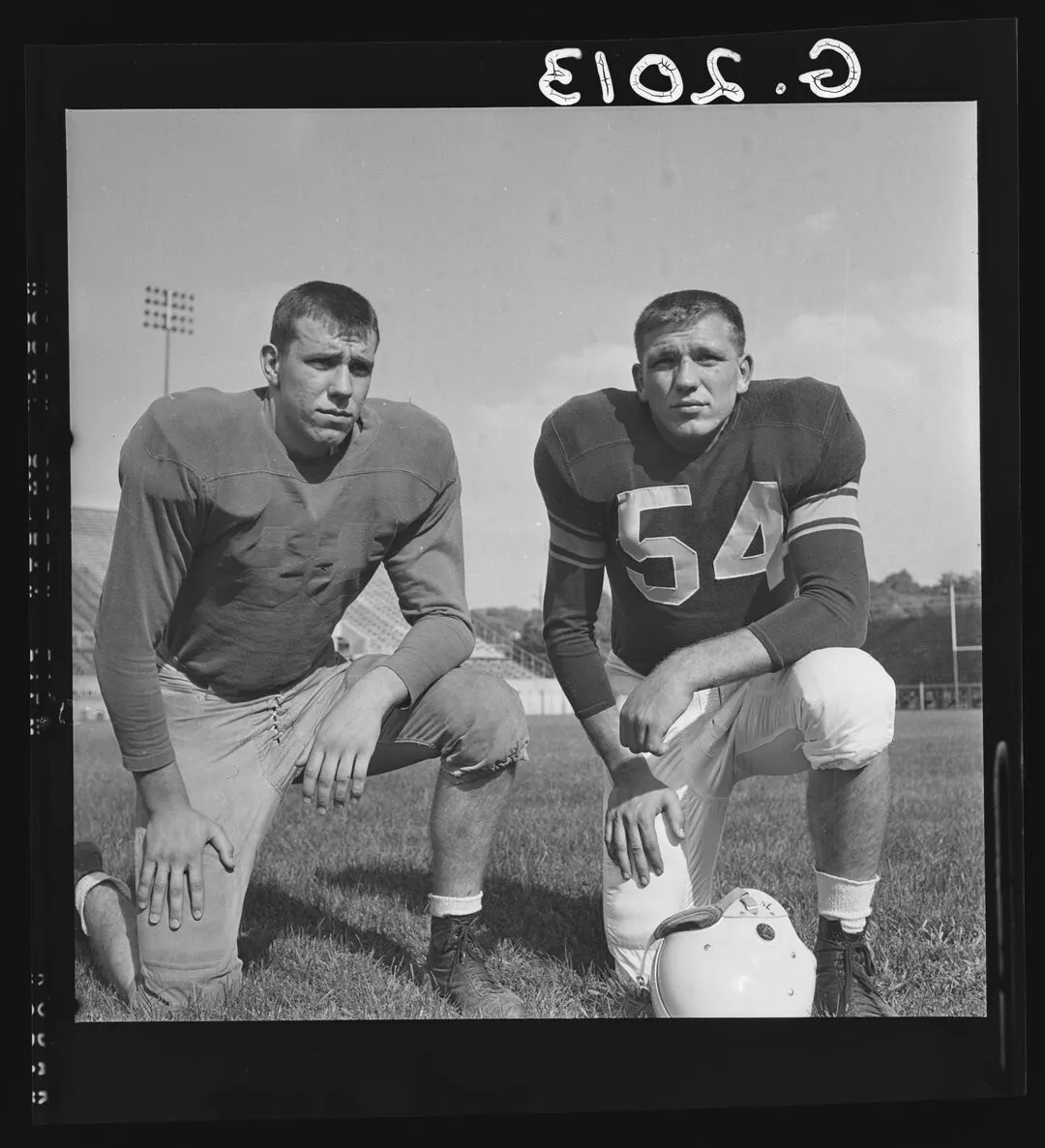
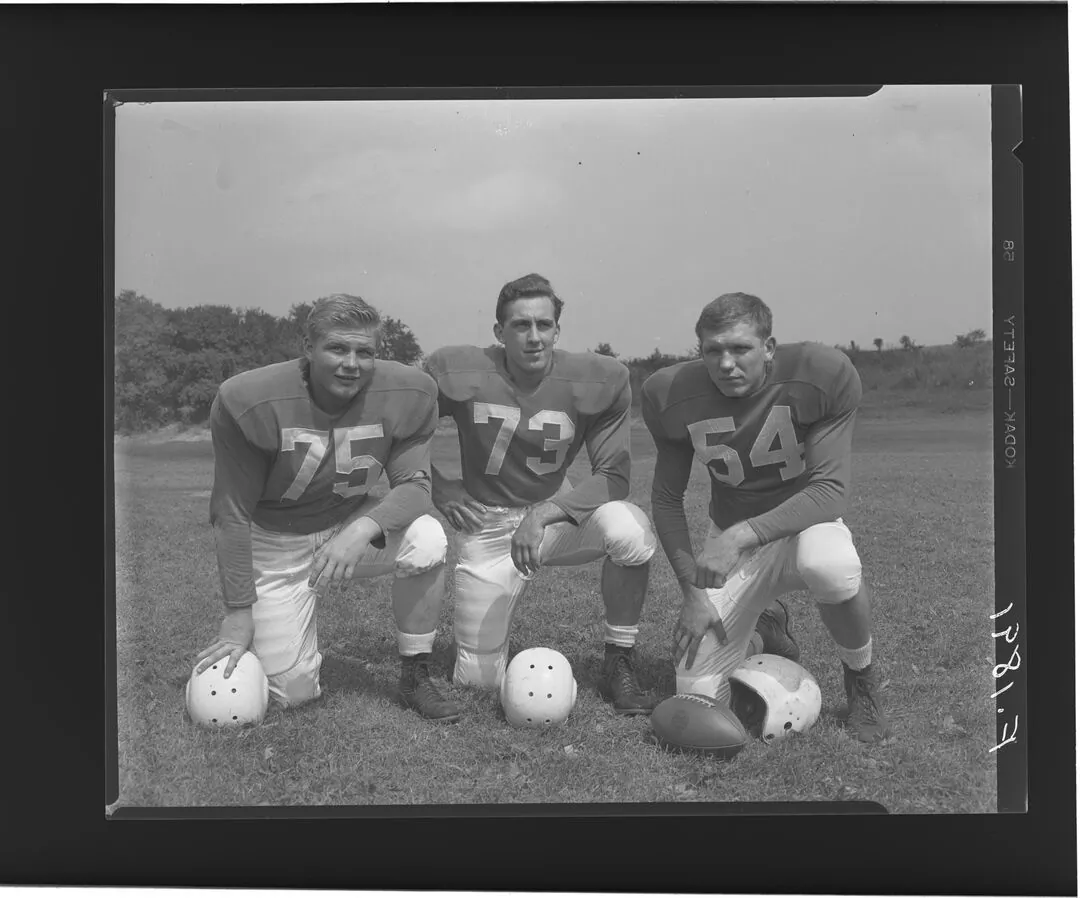
Frank Fuller, at right wearing number 54, in a University of Kentucky football archive photograph with George Fuller.
University of Kentucky Archive Photograph — Frank Fuller at right, No. 54

Kentucky Years Room — 1949–1952

From Prospect to Defensive Mainstay

Frank Fuller arrived in Kentucky’s newspaper record as a promising tackle. Over four documented seasons he was tested at center, used on both sides of the line, became an established veteran, and finished 1952 as one of Kentucky’s central defensive figures.

In This Room10 sectionsBack to room entrance ↑
Warm panels — exhibit storyCool panels — evidence, sources & boundaries

Kentucky at a Glance

A Career Built on Versatility

The surviving Kentucky sources do not show one fixed position. They document a lineman whose assignments changed as the team’s needs changed.

The development arc

In 1949, Frank appeared as a developing tackle. In 1950, Kentucky moved him inside to center during spring work. By 1951 he was a varsity center, a defensive-line contributor, and a player explicitly described as able to play offense or defense.

By 1952 he had returned to tackle while remaining available at center. Contemporary coverage described him as an established veteran, a two-way player, the mainstay of the defensive line, and eventually Kentucky’s “shock trooper” — the lineman used where he was most needed.
Documented Kentucky Period1949–1952From spring-practice prospect to senior defensive leader.
1952 RosterSenior • 6'4" • 212 lbDuBois, Pennsylvania; two previous letters listed in September 1952.
Position JourneyTackle → Center → Two-Way Lineman → TackleWith significant defensive-line responsibility throughout the later years.
Major 1952 RecognitionPlayer of the Week — Texas A&MAwarded by The Kentucky Kernel after a disruptive defensive performance.

Bear Bryant Era Context

Program Context

Frank developed at Kentucky under Paul “Bear” Bryant

The Kentucky chapter belongs to a period when Frank’s role expanded beyond a single position and the surviving record repeatedly emphasizes versatility.

Why It Matters

Versatility became the bridge to the professional game

Tackle, center and two-way use help explain why Frank’s later career cannot be understood through one fixed position label.

Development Timeline

1949–1951 — Learning Every Job the Line Needed

Frank’s position history makes sense when read chronologically: tackle was the foundation, center became a real assignment, and two-way usefulness became the defining theme.

1
April–July 1949

Promising Tackle From DuBois

The Kentucky Kernel reported that Frank and Bill McKenzie had shown promise at tackle during spring practice. A July roster discussion then identified Frank specifically as a right tackle from DuBois and among the tallest players on the squad.

Sources: The Kentucky Kernel, April 1 and July 1, 1949.

2
March–April 1950

The Center Experiment Became Real

A March roster still listed Frank at tackle. One month later, Blue–White spring-game coverage placed him at center for the White team in both article text and the lineup. The following week’s recap again called him a center and included him among players who looked good.

Sources: The Kentucky Kernel, March 10, April 21 and April 28, 1950.

3
September–October 1951

No. 54 — Center, Defender, Two-Way Lineman

The 1951 varsity roster listed Frank as No. 54 at center. Within weeks, other coverage also placed him on the defensive line and at tackle. A Georgia Tech preview explicitly said Frank and John Owens could play either offense or defense.

Sources: The Kentucky Kernel, September 21, September 28 and October 5, 1951.

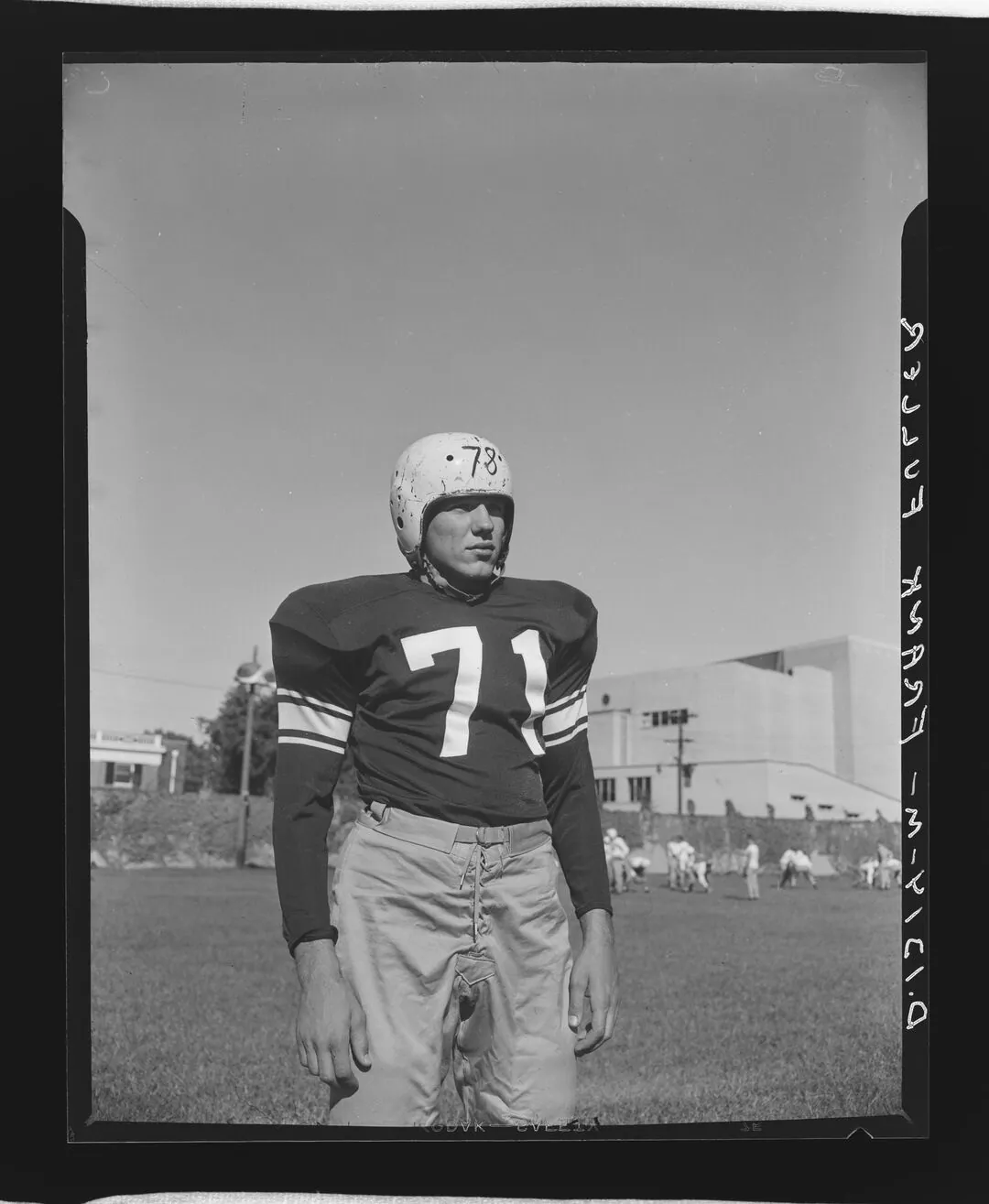
1949 University of Kentucky football portrait identified as Frank Fuller.
Early Kentucky

1949 Member Portrait

An early visual anchor for the beginning of Frank’s Kentucky development.

University of Kentucky group photograph with Frank Fuller at right wearing number 54.
No. 54

MacKenzie, Netoskie and Fuller

Frank appears at right wearing number 54 in this University of Kentucky archive group image.

Breakthrough and Game Impact

Sugar Bowl, Mississippi State and the Cotton Bowl

September 13, 1951 • The Atlanta Constitution

Sugar Bowl Breakthrough — A Contemporary Account

Furman Bisher described Frank as Kentucky’s No. 2 center and reported that his first collegiate minutes came against Oklahoma in the Sugar Bowl. Bisher further reported that Bear Bryant awarded Frank a letter for that performance.

Evidence boundary: the account does not give snaps or statistics, and the archive preserves a separate letterman chronology question rather than forcing the sources to agree.

October 19, 1951 • The Kentucky Kernel

Mississippi State — Fourth-Quarter Recovery

Frank recovered a fourth-quarter Mississippi State fumble after Larry Jones blocked the runner away from the loose ball. Kentucky then assembled its final scoring drive in the 27–0 victory.

This is a directly documented turnover recovery, not a generalized defensive estimate.

January 1, 1952 • Cotton Bowl

Championship Defense Against TCU

Kentucky defeated TCU 20–7. The Atlanta Constitution credited Frank, Ray Correll, Jim MacKenzie and Bob Fry together as players who sparked Kentucky’s defense, while a personnel list placed Frank among the right tackles.

The Kentucky Kernel’s later championship lineup also listed Frank in the right-tackle group.

Evidence Boundary

Collective Praise Stays Collective

The Cotton Bowl sources do not provide Frank’s individual tackle, sack, snap or start totals. This room therefore preserves the supported conclusion: he was part of the right-tackle group and received direct collective credit for the defense.

Kentucky Game Impact — Documented Moments

Bowl Stage

Sugar Bowl and Cotton Bowl participation place Frank inside two of the defining team moments of his Kentucky years.

Mississippi State

The newspaper record documents a Frank Fuller fumble recovery.

Ole Miss

Coverage credits Frank within a documented defensive stand.

Texas A&M

The strongest documented college game: repeated backfield penetration, recovery of a blocked punt that set up the winning field goal, and Player of the Week recognition.

Senior Rise

1952 — Established, Trusted and Needed on Both Sides

By spring and fall 1952, the language around Frank had changed. He was no longer simply a prospect; he was described as one of the veterans Kentucky depended on.

March 21, 1952

Established Veteran Lineman

The Kentucky Kernel grouped Frank with veteran linemen who were “already established” entering spring practice.

March 28, 1952

Blue Defensive Front Leadership

A spring-game preview said the Blue defense would be headed up front by Bob Fry and Frank Fuller.

September 9, 1952

One of Five Key Two-Way Players

The Atlanta Constitution identified Frank as one of only six seniors and one of five key players expected to serve on both sides of the ball.

September 18, 1952

Tested Veteran Tackle

The Kentucky Kernel called Bob Fry and Frank Fuller “two tested veterans” at offensive tackle and separately placed Frank on the early offensive line praised by Coach Bryant.

May 23, 1952

Kentucky Track Squad

A captioned Kentucky Kernel team photograph names Frank in the 1952 track squad. The source confirms membership but does not identify his event, so this room does not assign one.

October 3, 1952

Ole Miss Defensive Stand

Frank was among the defensive stalwarts credited with the Kentucky stand that stopped Ole Miss at the Wildcats’ 14-yard line. The source credits the group, not a single tackle to Frank.

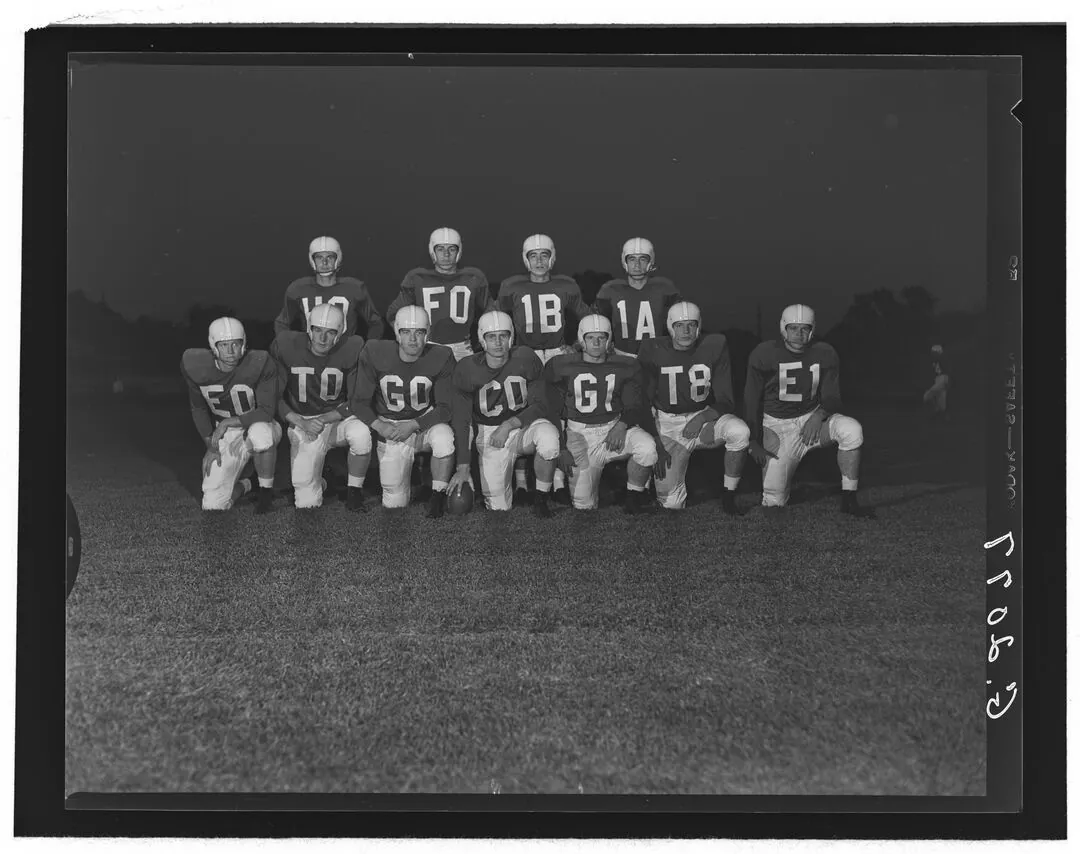
1952 University of Kentucky opening lineup photograph with Frank Fuller identified in the front row.
Senior Season

1952 Opening Lineup

One of the strongest surviving team-context images from Frank’s senior Kentucky period.

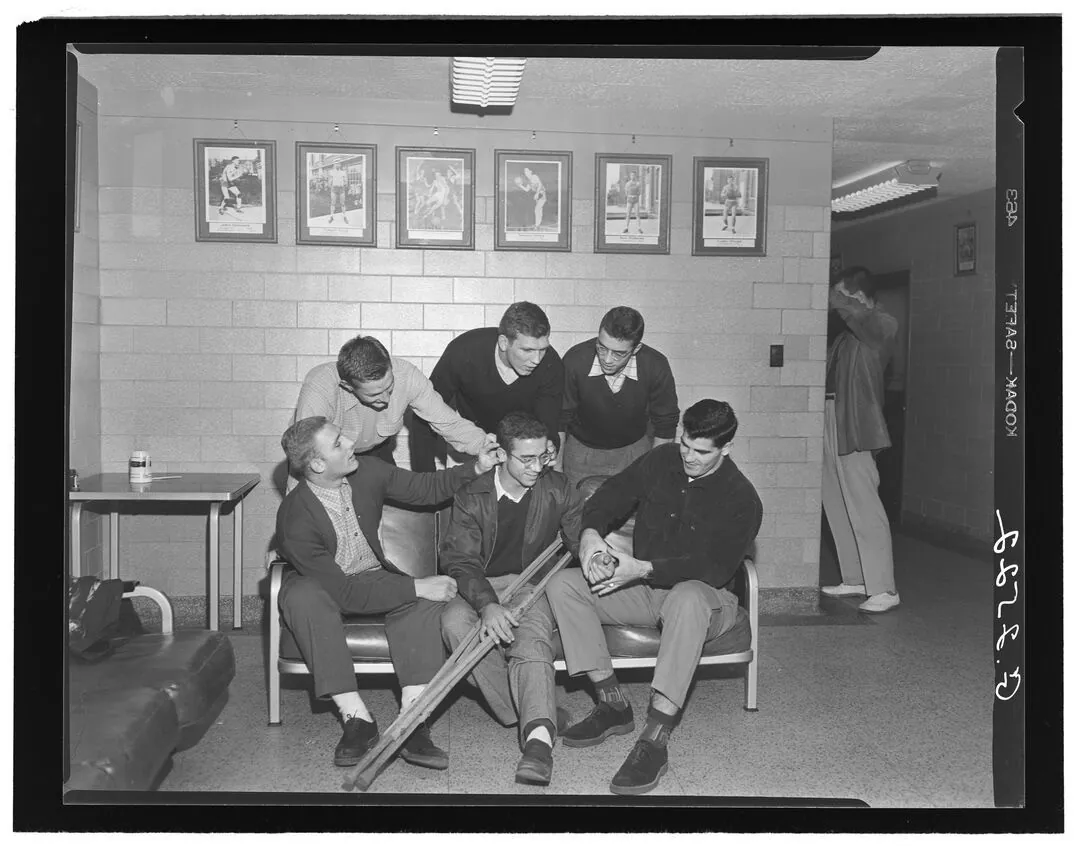
University of Kentucky senior football group photograph whose caption context includes Frank Fuller.
Team Context

1952 Senior Group

Caption context names Frank among the Kentucky players in this indoor group photograph.

Game Spotlight

Texas A&M — Frank’s Strongest Documented College Game

The October 1952 clipping set gives unusually specific evidence for Frank’s effect on a game — and preserves his own reaction to the atmosphere around it.

View the Evidence — Texas A&M performance
Confirmed
Source basis

The Kentucky Kernel, October 1952

What it supports

Contemporary Kentucky coverage identifies the Texas A&M game as one of Frank’s best and separately records Player of the Week recognition.

Boundary

The evidence supports the documented performance and recognition; it does not create undocumented tackle, sack, or snap totals.

Follow this evidence in the archive →
The Kentucky Kernel • October 10, 1952 • “Frank Fuller Chosen For Outstanding Play”

Player of the Week

The Kernel called Frank the mainstay of Kentucky’s defensive line and the only defensive tackle on the squad with experience. Its game account tied that reputation to specific actions against Texas A&M.

Backfield penetrationFrank was reported repeatedly breaking into the Aggie backfield and disrupting plays before they developed.
Blocked-punt recoveryHe recovered a blocked punt in Texas A&M territory.
Winning-field-goal setupThe recovery created the scoring opportunity that produced what the article identified as the winning field goal.
Player of the WeekThe Kernel selected Frank for the honor after the performance; a December season recap repeated the selection.
Primary treatment elsewhere — Frank’s direct words

This room keeps the Texas A&M game evidence and performance context. The dedicated Voices room preserves Frank’s own 1952 reaction with its year and source.

Hear Frank’s Kentucky voice →
Frank’s Voice — Connected ExhibitFrank’s own reaction to the Texas A&M game survives in contemporary coverage. Hear the Kentucky-era quotation in Voices of Frank →

The Defining Description

“Shock Trooper” — The Lineman Kentucky Used Where Needed

The Kentucky Kernel • November 14, 1952

Top Defender and Versatile Veteran

The profile described Frank as a 6-foot-4, 212-pound tackle from DuBois, called him one of the most underrated performers in collegiate football, and presented him as Kentucky’s top defensive player for 1952 according to Coach Bryant.

Position Explanation

Tackle and Offensive Center

The same profile explains the position changes directly: Frank had alternated between tackle and offensive center and was called the “shock trooper” because he filled the position where most needed.

This is why the room does not treat his tackle and center listings as contradictions.

Two-Way Player Spotlight

What “two-way” means hereFrank was not confined to one modern specialist role. Kentucky evidence documents line service on offense and defense, plus movement between tackle and center. That versatility is central to the “Shock Trooper” identity preserved in this room.

Recognition and Transition

How the Kentucky Chapter Closed

The Kentucky chapter closes with recognition and a transition toward professional football. This room keeps only the milestones needed to understand that transition; the Awards Room owns the exact honor classifications, selectors and evidence boundaries.

1951United Press All-America Honorable Mention.
1952Senior recognition, another varsity letter and North-South Shrine Game participation.
Next chapterLos Angeles selected Frank in the 26th round of the 1952 professional draft.
Primary treatment — Awards Room

Use the honors register for exact levels, selectors and the distinction between formal recognition and contemporary evaluation.

Open the full Kentucky honors record →
Evidence / Verification

Reading the Record

What the Evidence Does — and Does Not — Establish

Source-grounded public interpretation

Position: Kentucky sources genuinely list Frank at both tackle and center; several explicitly document two-way or need-based use.

Letterman chronology: later Kentucky and Rams records list Frank as a 1950–1952 letterman, while a September 1951 Bisher account says Bryant awarded a letter for the Sugar Bowl performance. The private archive preserves that chronology issue rather than silently reconciling it.

Game statistics: the supplied college sources do not provide a complete tackle, sack or snap ledger. Group praise remains group praise.

Track: the 1952 caption proves track-squad membership but does not name Frank’s event.

Photographs: images identified as Frank remain separate from team-context photographs where he is explicitly not pictured.

Evidence / Verification

Featured Source Trail

Key Sources Behind This Room

This public room summarizes the evidence. The complete transcriptions, duplicate controls and unresolved-source work remain in the private Research Desk and master archive.

The Kentucky Kernel

April 1, 1949 — Intrasquad Preview

Early tackle promise.

The Kentucky Kernel

April 21 & 28, 1950 — Blue–White Coverage

Center assignment and positive spring-game recognition.

The Atlanta Constitution

September 13, 1951 — Furman Bisher

No. 2 center and Sugar Bowl breakthrough account.

The Atlanta Constitution

January 2, 1952 — Cotton Bowl

Direct collective defensive credit and right-tackle placement.

The Kentucky Kernel

October 10, 1952 — Player of the Week

Texas A&M backfield penetration, blocked-punt recovery and recognition.

The Kentucky Kernel

November 14, 1952 — “Shock Trooper” Profile

Senior reputation, top-defender assessment and direct explanation of his positional versatility.

Continue to the public Evidence Room →

Continue Exploring

Follow Frank Before and After Kentucky