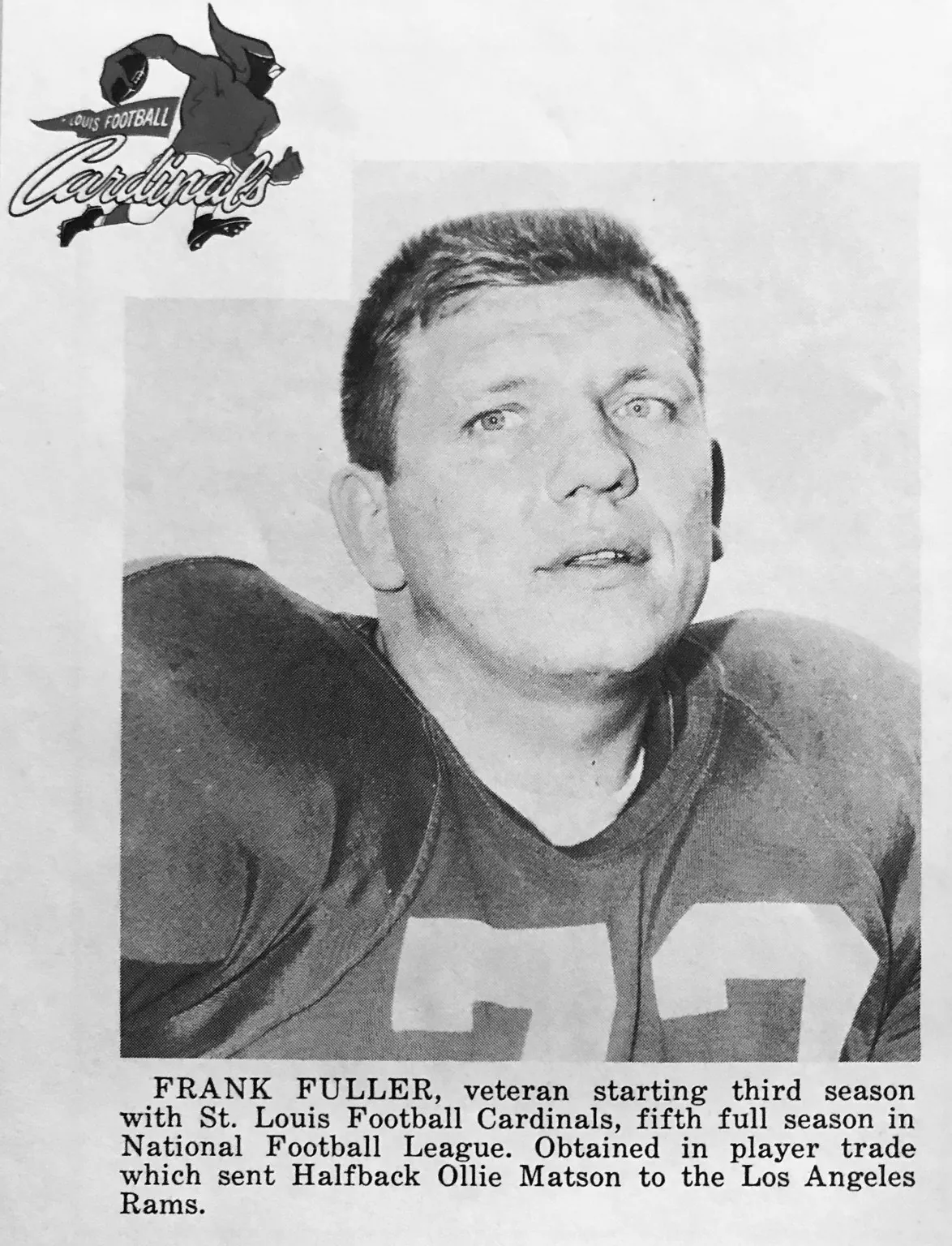
Frank Fuller in a Cardinals uniform portrait.
Professional portrait from Frank Fuller’s Cardinals years — the period of his strongest documented NFL recognition.

Football Career Room

Teams, Seasons & Turning Points

Follow Frank Andrew Fuller from DuBois and the University of Kentucky through Army service and a professional career with the Los Angeles Rams, Chicago and St. Louis Cardinals, and Philadelphia Eagles.

In This Room9 sectionsBack to room entrance ↑
Warm panels — exhibit storyCool panels — evidence, sources & boundaries

Career Snapshot

Who Frank Fuller Was

Frank’s football story is a story of position flexibility, interruptions, recovery, and recognition across several distinct eras.

A Lineman Used Where He Was Needed

Frank began as a tackle, was converted to offensive center at Kentucky, served on both sides of the line, and returned to tackle as a senior. In professional football, his identity settled around the defensive line, especially defensive tackle.

Kentucky’s own 1952 profile described that versatility with the period phrase “shock trooper” — a player who could fill the position most needed.
High SchoolDuBois High SchoolClass of 1948 • right tackle • first-team all-district recognition
CollegeUniversity of KentuckyDocumented program years 1949–1952 • football letterman 1950–1952
Professional RoleDefensive LinemanDefensive tackle with a brief Rams defensive-end experiment in 1956
Professional Playing Seasons1953–1963, with gapsRams, Cardinals and Eagles; military service and injury explain important interruptions

Career Arc — One View

DuBois → KentuckyA tackle foundation expands into multi-position college line play.
Army → RamsMilitary interruption, injury, return and professional rise.
Cardinals → EaglesPeak recognition, leadership, recovery and the final NFL chapter.

Verified Career Path

The Full Team and Season Flow

The Cardinals chapter is split between Chicago and St. Louis so the timeline reflects the franchise’s location in each season rather than treating every Cardinals year as a St. Louis season.

1
Through 1948

DuBois High School — Foundation

Frank built his early reputation as a right tackle and multi-sport athlete. His senior-year football evidence records first-team all-district recognition.

Right tackleClass of 1948DuBois, Pennsylvania
2
1949–1952 documented program period

University of Kentucky — College Development

Frank moved between tackle and offensive center, became a two-way veteran, earned letters in 1950, 1951 and 1952, and developed into one of Kentucky’s most trusted defensive linemen.

TackleCenterLetterman 1950–1952
Explore the Kentucky Years Room →
3
10 Jan 1954 – 15 Aug 1955

United States Army — Service Interruption

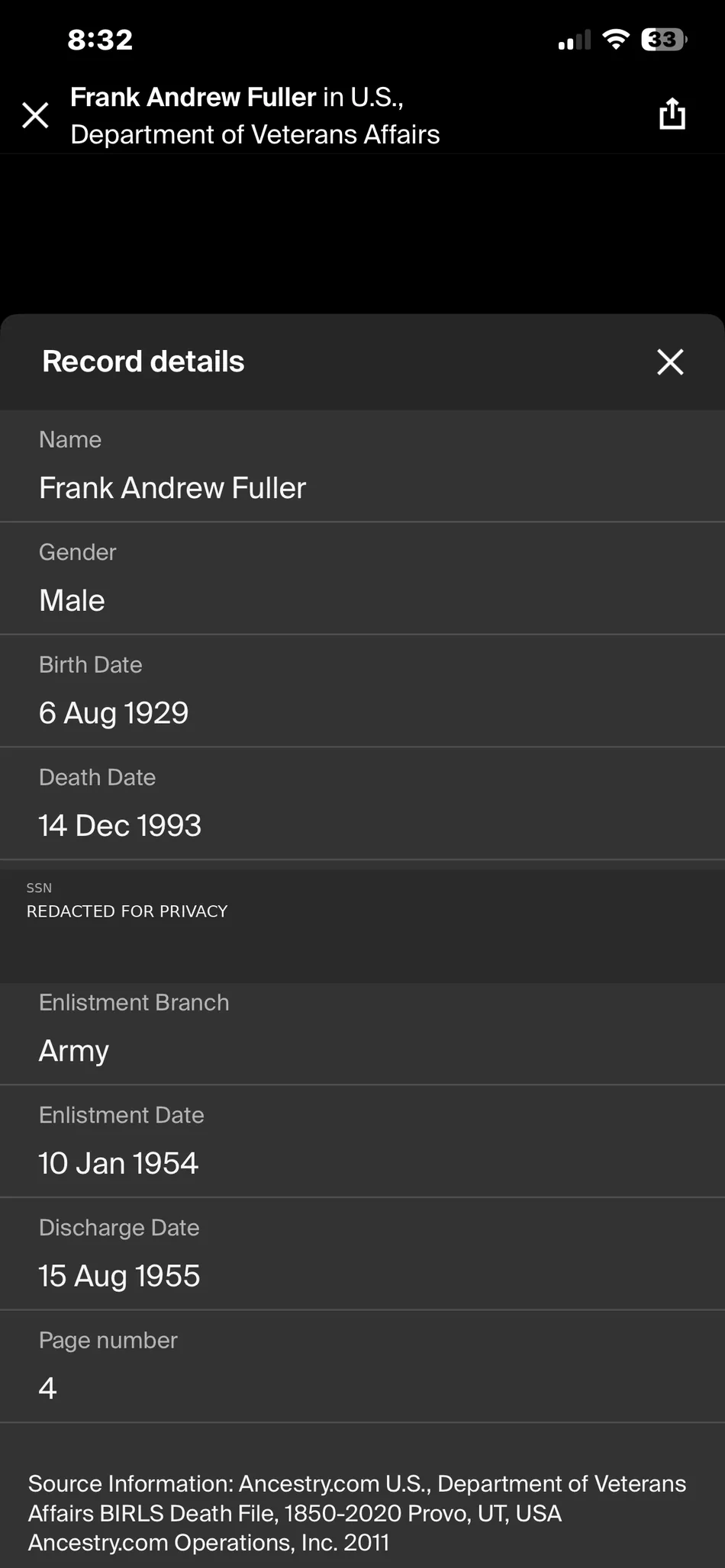
The redacted Veterans Affairs BIRLS record documents Army service during the early professional period. The public exhibit treats this as an Army-service interruption rather than using unsupported draft wording.

ArmyBIRLS record
4
1953 • 1955 • 1957–1958

Los Angeles Rams — Professional Beginning and Rise

Frank entered professional football with Los Angeles. Team material later described him as an outstanding rookie defensive tackle, a great pass rusher, and a spirited player.

Defensive tackle1956 injury interruptionNo. 71 in later Rams material
Explore the Rams Years Room →
5
1959

Chicago Cardinals — Recognition Breakthrough

Frank arrived in the Ollie Matson trade and reached the strongest recognition of his career: a 1959 Pro Bowl selection and separate second-team All-NFL selections from the Associated Press and New York Daily News.

Defensive tacklePro Bowl selectionChicago Cardinals
Explore the Cardinals Years Room →
6
1960–1962

St. Louis Cardinals — Career Peak and Leadership

After the franchise moved to St. Louis, Frank continued as a veteran defensive lineman and leader. His 1960 season brought The Sporting News All-NFL First Team recognition before a broken leg ended the season.

Defensive tackleDefensive captainNo. 72
Explore the Cardinals Years Room →
7
1963

Philadelphia Eagles — Final NFL Chapter

Philadelphia acquired Frank from St. Louis in exchange for guard John Wiltenborn. Historical Eagles records list him as No. 72 and appearing in five games before a broken leg ended his season.

Defensive tackle / tackleNo. 72Five games
Explore the Eagles Years Room →

Position Journey

The Lineman Who Filled Every Need

The changing position labels in Frank’s record are not simply contradictions. Contemporary sources document real movement between roles.

DuBois / Early Kentucky

Tackle

The starting foundation: right tackle in DuBois and tackle during Kentucky’s early period.

Kentucky

Offensive Center

Kentucky converted Frank from tackle to center and used him there as part of his developing varsity role.

Kentucky / NFL

Two-Way Lineman → Defensive Tackle

By his senior Kentucky season he was used wherever needed, then became known professionally as a defensive tackle and defensive leader.

Position Journey — Simplified

DuBois

Right Tackle

The high-school foundation.

Kentucky

Tackle → Center → Two-Way

Real movement between line responsibilities.

Professional

Defensive Tackle

Primary pro identity, with a brief Rams defensive-end experiment.

Career Turning Points

The Moments That Changed the Timeline

A few events explain the major changes and gaps in Frank’s football career.

1951

Sugar Bowl Breakthrough

A contemporary account reported that Frank’s first collegiate minutes came against Oklahoma in the Sugar Bowl and that Bear Bryant awarded him a letter for the performance.

1952

Cotton Bowl and Senior Rise

Frank was among the Kentucky defenders credited with sparking the 20–7 Cotton Bowl victory over TCU and entered his senior season as an established veteran lineman.

1954–55

Army Service

Military service interrupted the early Rams chapter before Frank returned to professional football.

1956

Rams Broken Leg

A broken leg in the fifth preseason game cost Frank the entire league season, creating another gap in the playing record.

1959

Ollie Matson Trade

The Rams sent Frank to the Chicago Cardinals in the major Ollie Matson trade, beginning the most decorated period of Frank’s professional career.

1960

Recognition and Another Injury

Frank earned The Sporting News All-NFL First Team recognition for the 1960 season, but a broken leg ended his year early.

1963

Final Season in Philadelphia

Frank’s Eagles chapter ended with another reported broken leg, closing his documented NFL playing career.

Recognition Layer

Exact Honors — Not Generic Labels

Recognition appears here only to show where it falls in the career sequence. The Awards Room is the authoritative public treatment for exact selectors, levels and later legacy honors.

Kentucky1951 United Press All-America Honorable Mention.
Cardinals peak1959 Pro Bowl and selector-specific All-NFL recognition, followed by The Sporting News First Team in 1960.
Later legacy2023 Kentucky Pro Football Hall of Fame induction.
Evidence / Verification

Reading the Record

Why the Professional Timeline Has Gaps

A year-by-year list can make Frank’s career look inconsistent unless the interruptions are explained.

Playing seasons and team association are not always the same thing.

1954: Rams material records Frank as absent because of service.

1956: Frank remained in the Rams organization, but a preseason broken leg cost him the entire league season.

1959–1962: The Cardinals franchise moved from Chicago to St. Louis after the 1959 season, so the two locations are shown separately.

1963: Eagles records show five games before a season-ending broken leg.

Career Interruptions — Keep the Gaps Visible

1954–1955

United States Army

Documented service interruption in the early professional sequence.

1956

Rams Broken Leg

A preseason injury removed an entire season from the playing record.

1960 / 1963

Later Broken-Leg Injuries

Separate Cardinals- and Eagles-era injuries belong to their own evidence trails.

Career Images

One Visual Marker for Each Major Era

The Career Room uses representative images without repeating the full Photo Gallery.

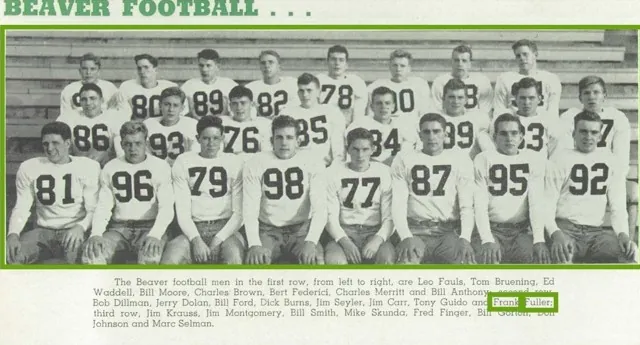
DuBois Beavers football team photograph.
DuBois

High School Foundation

Team context from the years before Kentucky.

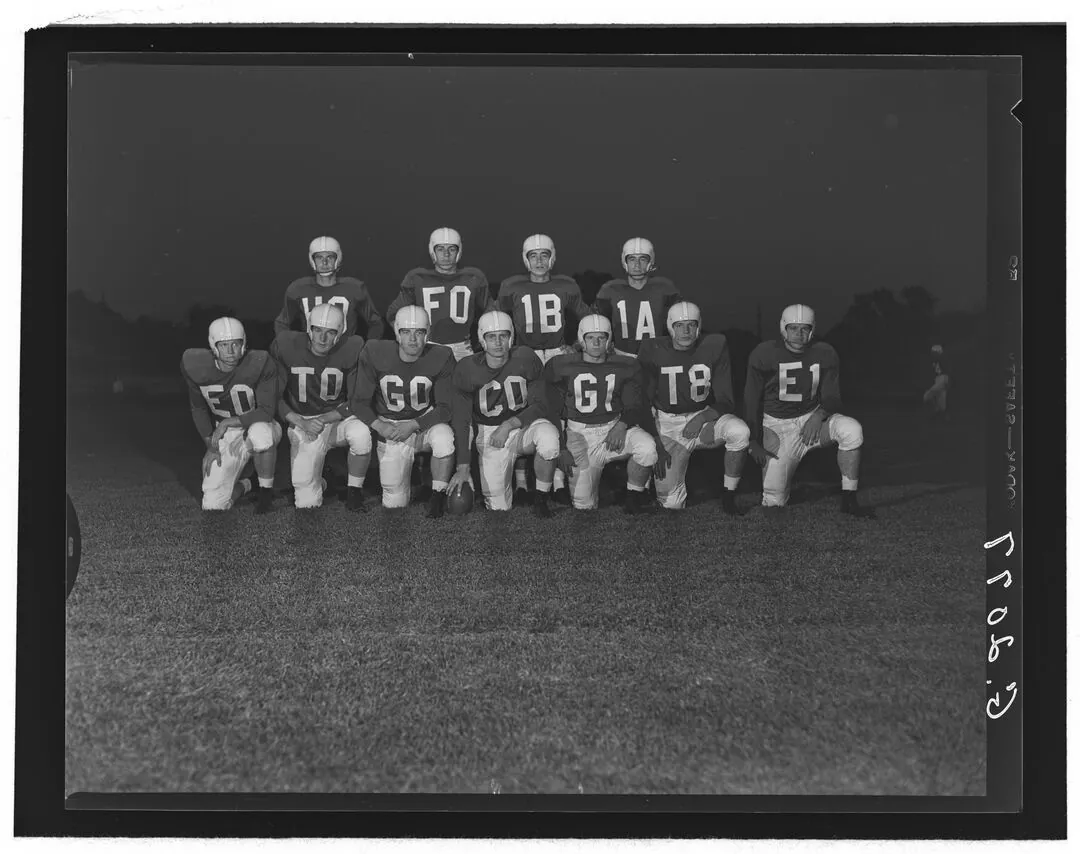
Kentucky opening lineup photograph with Frank Fuller identified in the lineup.
Kentucky

1952 Lineup Context

A visual anchor for Frank’s senior college period.

Redacted Veterans Affairs BIRLS record documenting Frank Fuller's Army service.
Army Service

Service Record

Public-safe evidence for the military interruption.

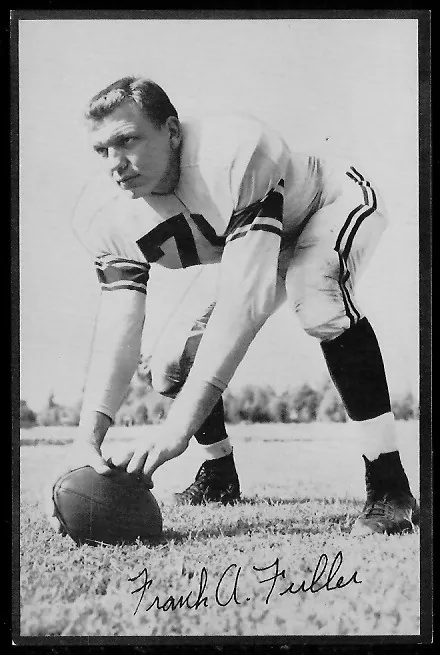
Frank Fuller in a Los Angeles Rams line stance portrait.
Los Angeles Rams

Professional Beginning

1953 Rams-era portrait.

Frank Fuller in a St. Louis Cardinals uniform portrait.
Cardinals

Career Peak

Representative image from the St. Louis years.

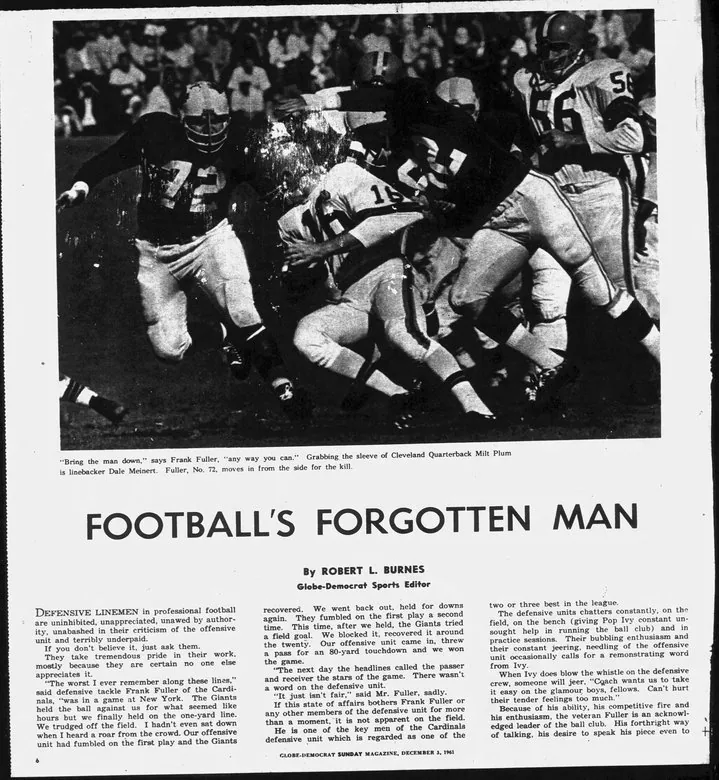
Source page thumbnail from the 1961 Football's Forgotten Man feature.
Contemporary Coverage

“Football’s Forgotten Man”

A surviving 1961 feature source from the Cardinals chapter.

Evidence / Verification

Press Snapshot

How Contemporary Sources Framed Frank

Contemporary descriptions help explain Frank’s reputation, but the Career Room does not duplicate the newspaper-by-newspaper treatment. Press language is kept separate from formal honors and from Frank’s own direct quotations.

Primary treatment — Press Story

Follow the progression from Kentucky versatility through Rams reputation and Cardinals leadership in the dedicated press exhibit.

Open How the Press Saw Him →

Continue Exploring

Go Deeper Into the Archive