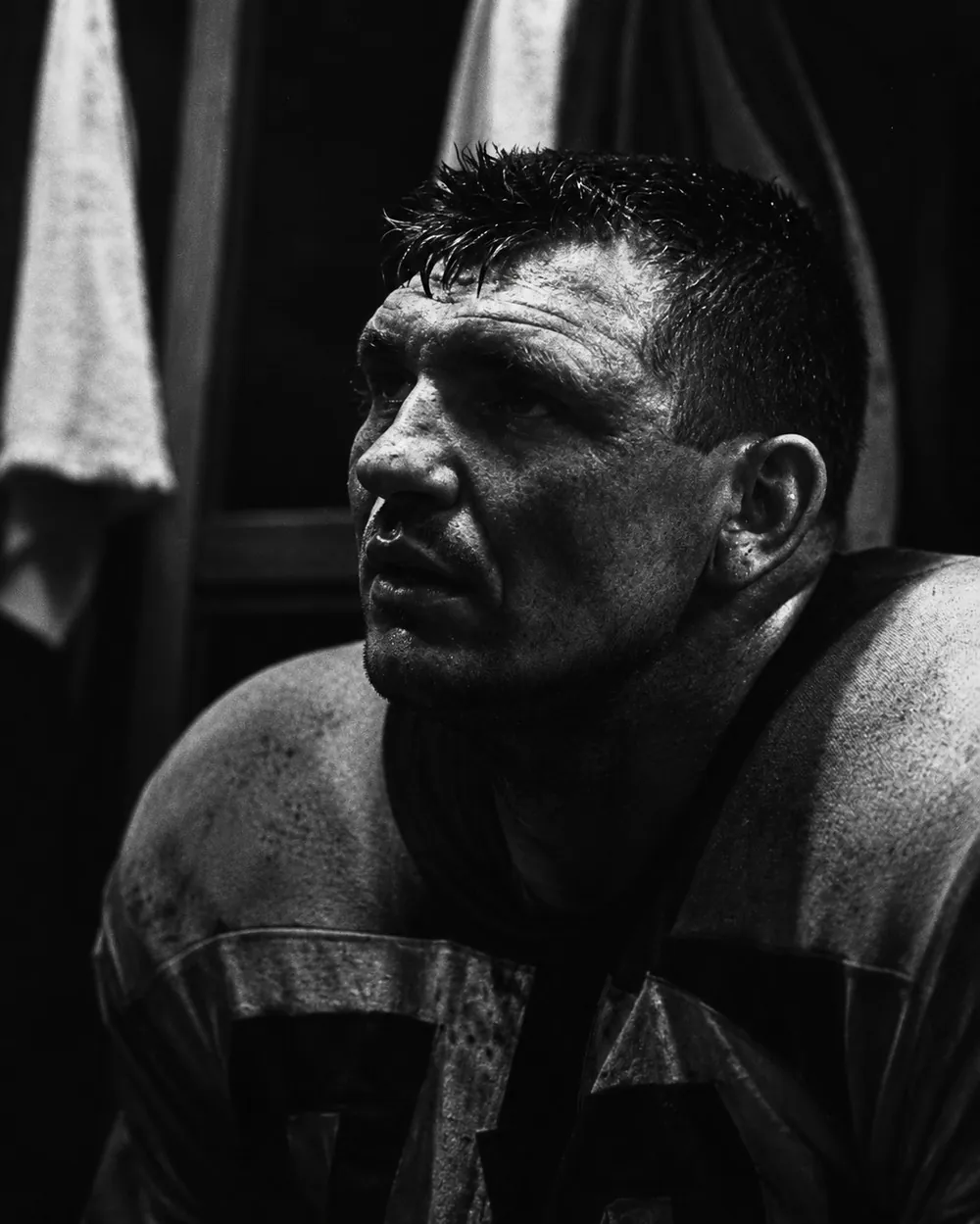
Featured Archive Portrait — Professional Football Years
Home Room — Main Entrance
Frank Legacy
Frank Andrew Fuller
1929–1993
From DuBois, Pennsylvania, to the University of Kentucky and professional football, Frank Fuller built a career around versatility, defensive line play, resilience, and a reputation that outlived his final season.
New Visitor?See Frank at a Glance ↓Warm panels — exhibit storyCool panels — evidence, sources & boundaries
60-Second Orientation
Frank Andrew Fuller — At a Glance
The essential route through Frank’s life and career before you enter the full exhibit. This is a source-controlled synthesis; the deeper rooms preserve the supporting evidence and claim boundaries.
1929—1993
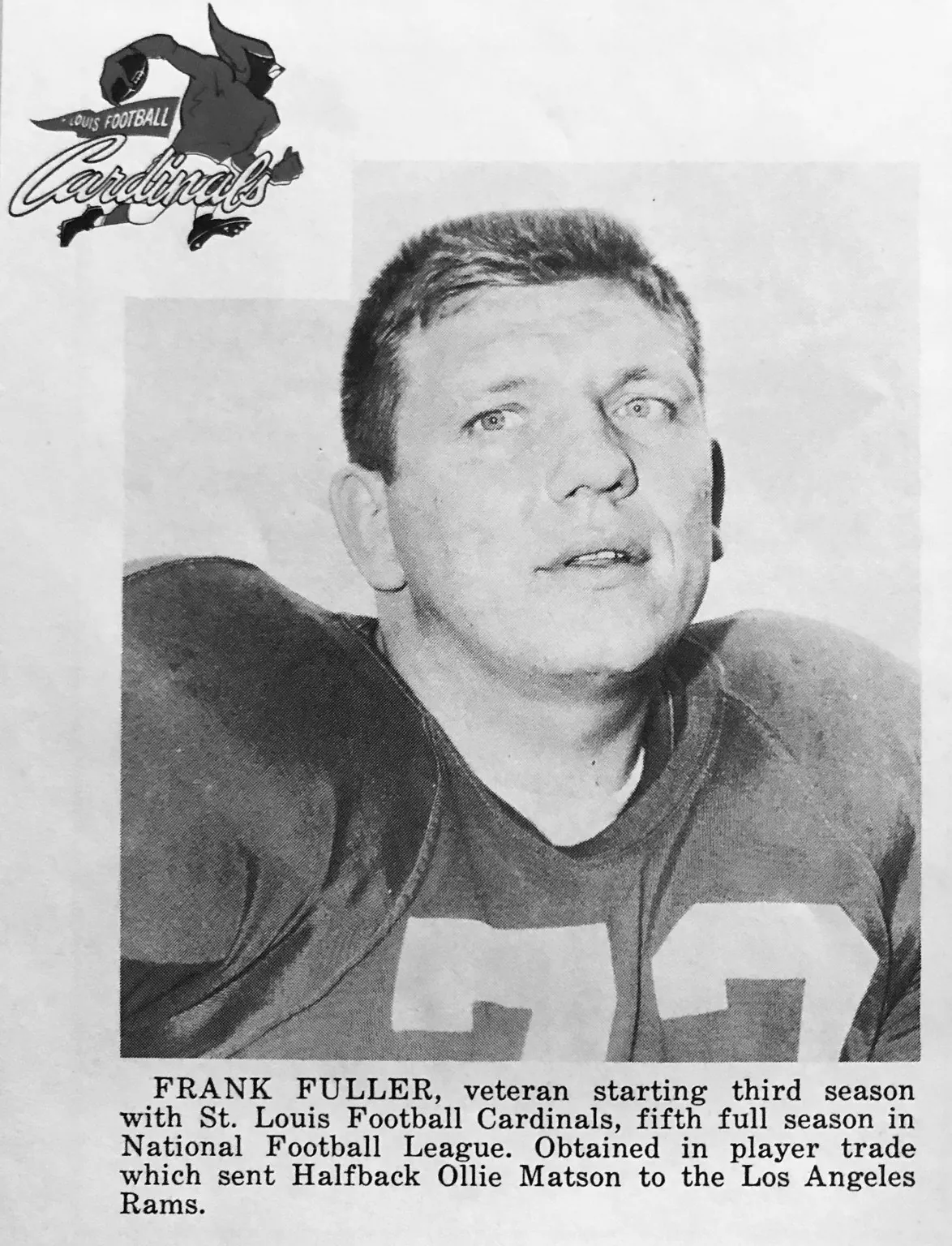
Identity
HomeDuBois, PennsylvaniaDuBois High School • Class of 1948
CollegeUniversity of KentuckyDocumented 1949–1952 • Letterman 1950–1952
Line RolesTackle • Center • Defensive TacklePosition wording varies by era and source
MilitaryUnited States Army1954–1955 career interruption
From DuBois lineman to nationally recognized professional defender
Frank’s documented path began at DuBois High School, continued through the University of Kentucky and United States Army service, and reached the NFL with the Los Angeles Rams, Chicago and St. Louis Cardinals, and Philadelphia Eagles.
011948DuBoisAthletic foundation
021949–1952KentuckyCollege development
031954–1955U.S. ArmyCareer interruption
041953 • 1955 • 1957–58RamsProfessional rise
051959–1962CardinalsCareer peak
061963EaglesFinal NFL chapter
Verified NFL Sequence
Los Angeles Rams1953 • 1955 • 1957–1958
Chicago Cardinals1959
St. Louis Cardinals1960–1962
Philadelphia Eagles1963
Open the complete football career →
More Than One Career
Frank’s surviving record also documents wrestling, insurance and real-estate activity, Fuller Development Corporation, coaching interest, and later public comments about life after professional sports.
Recognition Across Eras
Four milestones that frame the recognition story
1951United Press All-America Honorable MentionCollege • National selectorNational college recognition from United Press during Frank’s Kentucky years.
1959Pro Bowl SelectionChicago CardinalsA major professional milestone from his first Cardinals season.
1960The Sporting News All-NFL First TeamSelector-specific national honorFirst-team All-NFL recognition from The Sporting News.
2023Kentucky Pro Football Hall of FamePosthumous Class of 2023 inductionPosthumous institutional recognition of Frank’s professional career.
How to read this exhibitOrientation, not a replacement for the evidence trail.
Dates, team labels, honors and position wording here follow the archive’s verified summary. Open the connected rooms for source-level detail, unresolved questions and evidence boundaries.
Open Evidence & Methodology →Choose Your Visit
Four Ways Through the Exhibit
Start with the amount of time or level of detail that fits your visit. Every route reconnects to the full exhibit.
Quick Visit60-second orientationIdentity, teams, recognition and the essential career route.Full StoryBegin in DuBoisFollow the story chronologically from high school through legacy.Football HistoryCareer-first routeKentucky, Army interruption, Rams, Cardinals and Eagles.Evidence Deep DiveStart with the proofSee how sources, boundaries and verification support the public story.
Career Path
From DuBois to the NFL
Frank’s career is easiest to understand as a sequence of connected chapters rather than a single list of teams.
1
High SchoolDuBois — Athletic Foundation
Football, wrestling, track, and the first recognition of Frank as a tackle.
2
1949–1952Kentucky — Development and Recognition
Tackle, center, two-way line service, Cotton Bowl participation, and national college recognition.
3
Career InterruptionUnited States Army — Military Service
Service interrupted his early professional career before he returned to the Rams.
4
1953 • 1955 • 1957–1958Los Angeles Rams — Professional Rise
Defensive tackle, a brief defensive-end experiment, injury recovery, and growing pass-rush reputation.
5
1959–1962Chicago / St. Louis Cardinals — Career Peak
Pro Bowl recognition, All-NFL honors, defensive leadership, injury, recovery, and important game impact.
6
1963Philadelphia Eagles — Final NFL Chapter
Acquired from St. Louis and listed as number 72 before a season-ending leg injury.
Room Directory
Choose a Room
Start at Frank’s hometown roots, enter the Kentucky chapter, follow his professional rise with the Rams, explore the wrestling path that became The Battering Ram, step into the Cardinals career peak and final Eagles season, then follow his life beyond football and the story of how he continued to be remembered. You can also hear Frank in his own words, review contemporary press and exact honors, or explore photographs, collectibles, and source evidence.
Start Here
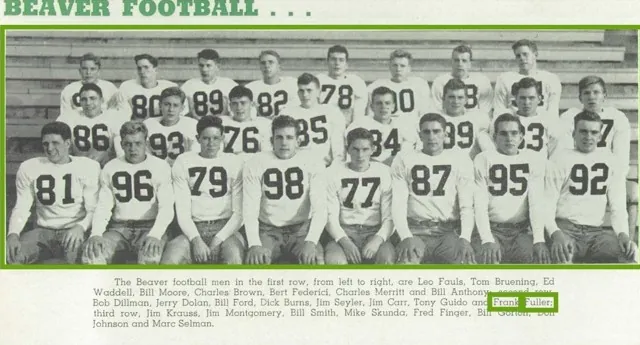
DuBois Roots Room
Class of 1948 identity, right-tackle football, varsity wrestling, track, school life, and the documented road to Kentucky.
College Years
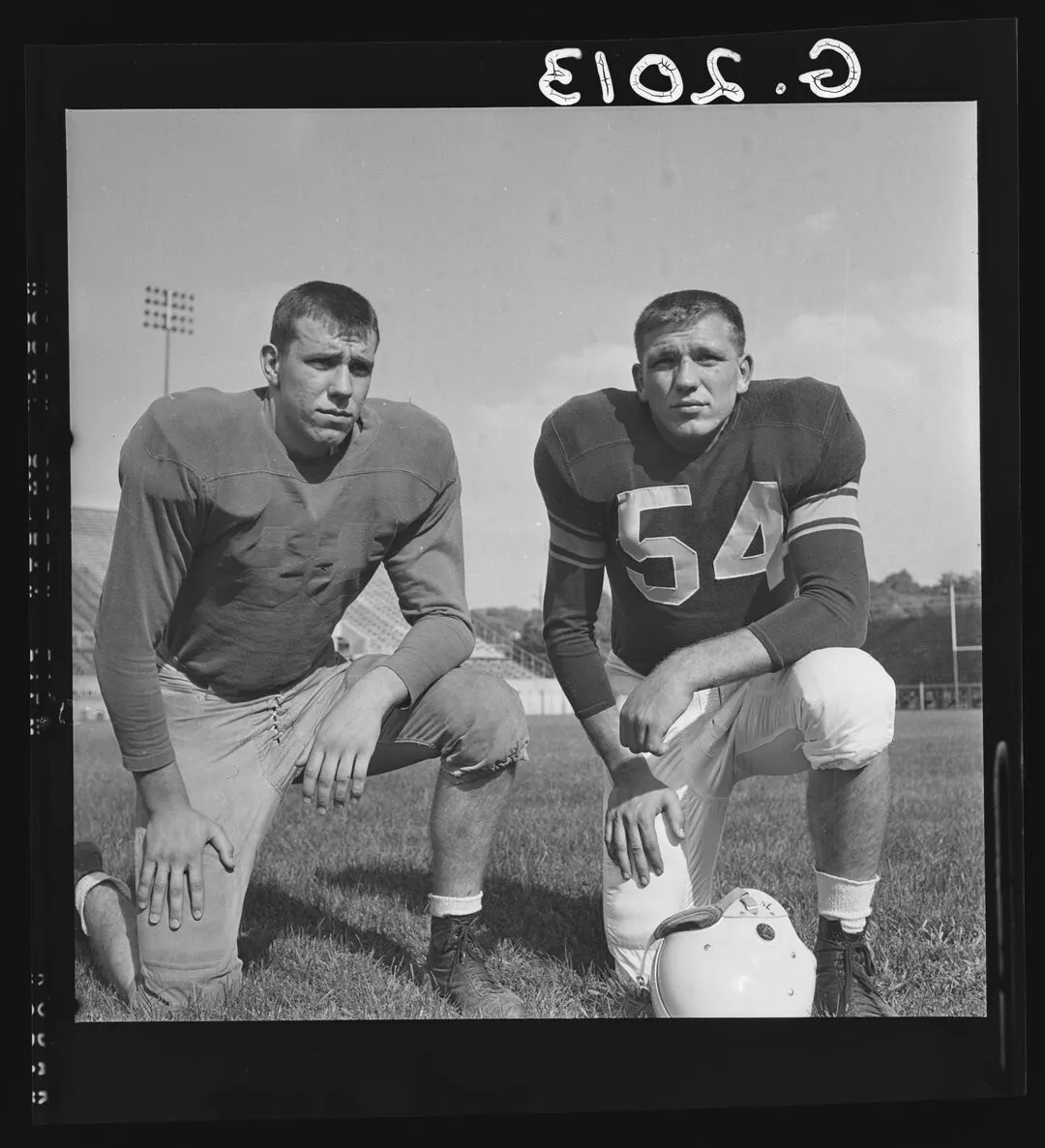
Kentucky Years Room
From promising tackle and center experiment to two-way veteran, defensive mainstay, and Player of the Week.
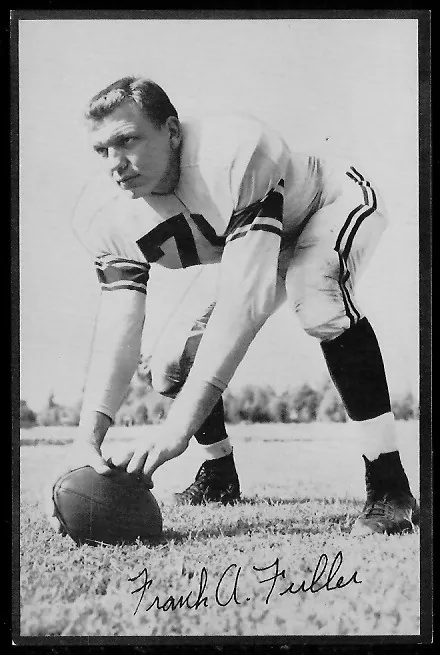
Professional Beginning
Rams Years Room
Rookie arrival, military interruption, injury, defensive-tackle rise, pass rushing, wrestling, and the 1959 trade.
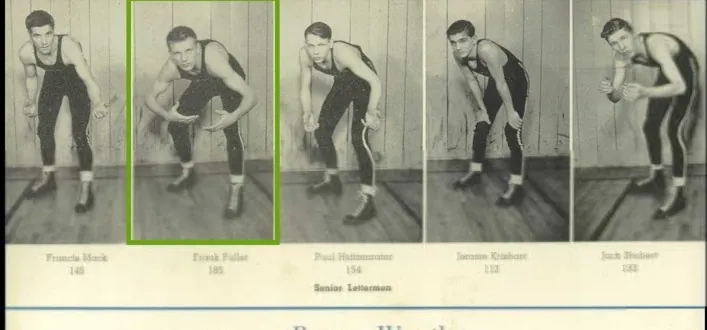
Second Athletic Identity
Wrestling Journey
Varsity heavyweight roots, the 1948 Junior AAU recognition, Kentucky Colonel, The Battering Ram, and the Leo Nomellini challenge.
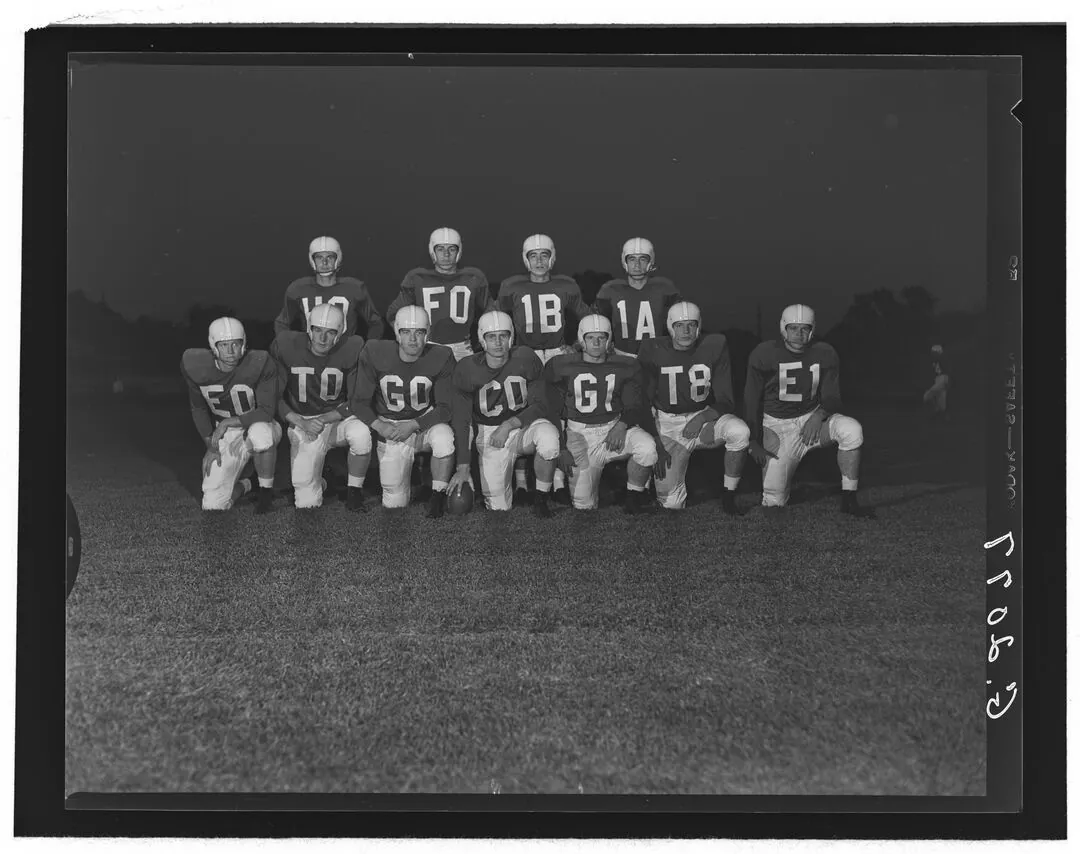
Career Story
Football Career Room
Kentucky, military interruption, Rams, Cardinals, Eagles, honors, and career sequence.
Career Peak
Cardinals Years Room
Chicago recognition, St. Louis captaincy, national honors, injury, recovery, and the 1961 comeback.
Final NFL Chapter
Eagles Years Room
The 1963 trade from St. Louis, No. 72 roster identity, five games, and the broken leg that ended Frank’s season.
Beyond the NFL
Life After Football
Insurance, real estate, Fuller Development Corporation, coaching ambitions, retirement, employment, and Frank’s later perspective on life after sports.
Honors & Remembrance
Legacy Room
DuBois remembrance, the Frank Fuller Lineman Award, Kentucky Pro Football Hall of Fame recognition, reputation over time, and preservation of the surviving record.
His Own Words
Voices of Frank
Verified direct quotations on football, wrestling, recovery, team loyalty, business, coaching, retirement, education, and life after sports.
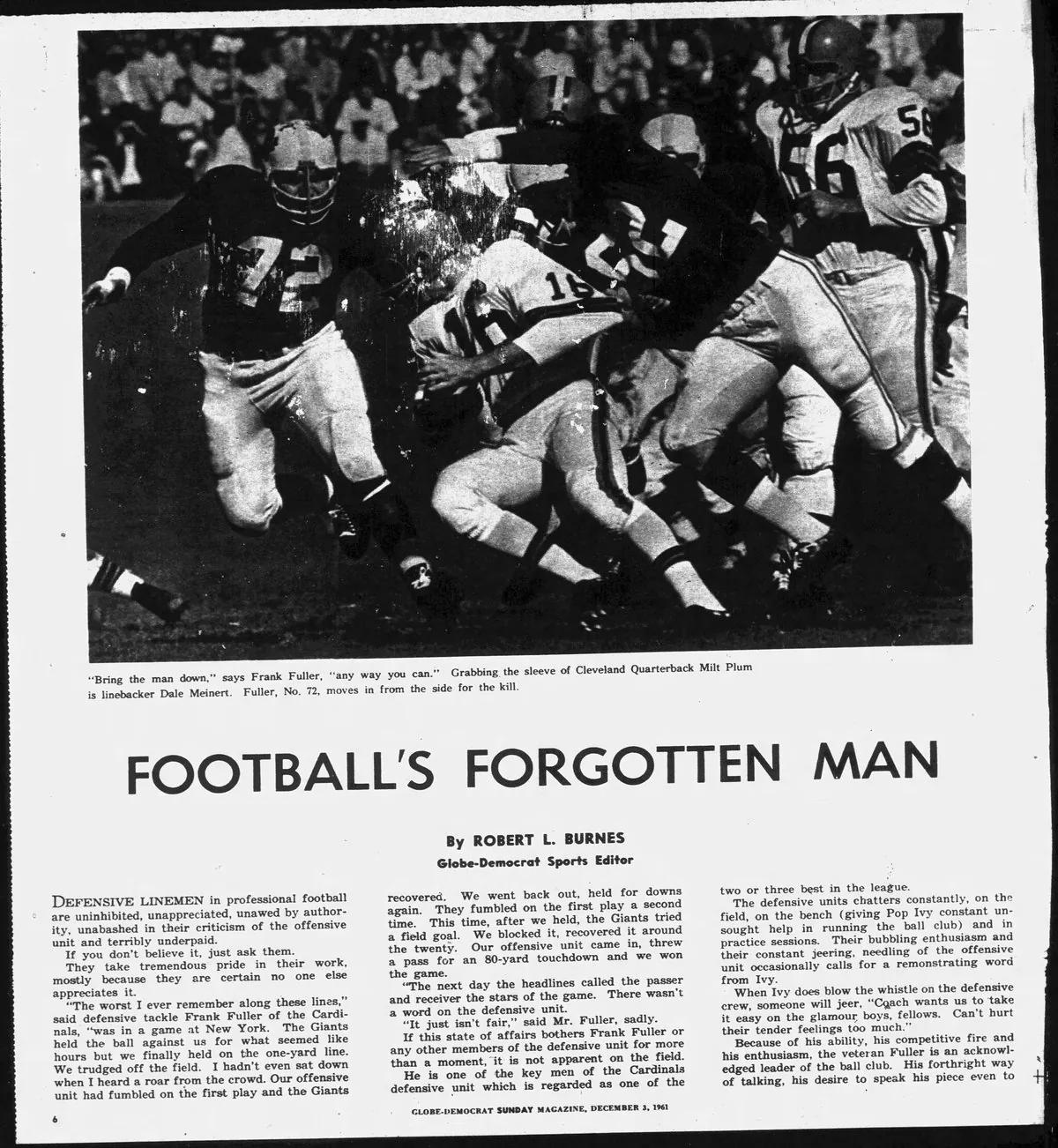
Contemporary Coverage
Press Story
Follow how newspapers, sportswriters, columns and quoted contemporaries described Frank from a promising Kentucky lineman to an NFL defensive captain and veteran.
Awards & Recognition
Awards Room
Exact honors from DuBois through Kentucky and the NFL, with selectors, years, evidence status, claim boundaries, and later legacy recognition.
Visual Archive
Photo Gallery Room
Identified portraits, team photographs, publication images, and era context.
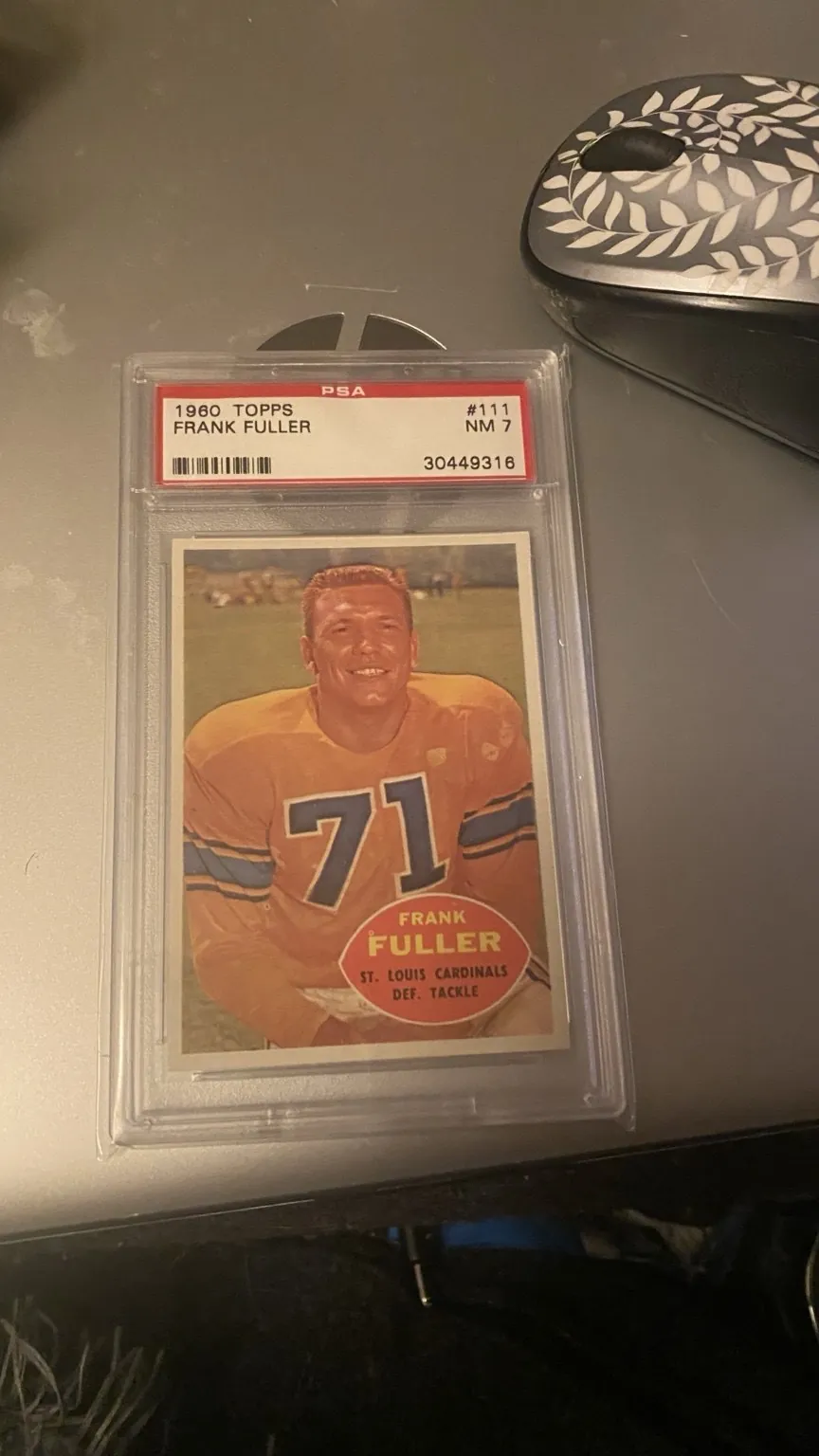
Physical Archive
Cards & Collectibles
Family-held cards, photographs, and collectible objects connected to Frank’s career.
Sources & Proof
Evidence Room
Public-facing records, source context, and the evidence behind exhibit claims.
Exhibit Highlights
Three Ways Into Frank’s Story
The “Shock Trooper”
Kentucky sources describe a lineman who alternated between tackle and offensive center and filled the position most needed.
Enter the Kentucky Years Room →Professional Recognition
The 1959 Pro Bowl selection and selector-specific All-NFL honors mark the strongest documented recognition of Frank’s professional career.
Open the Awards Room →Recognition That Continued
Frank’s career was honored decades later through the Kentucky Pro Football Hall of Fame and the Frank Fuller Lineman Award in DuBois.
Enter the Legacy Room →Evidence / Verification
Contemporary Coverage
The Story Survives in the Sources
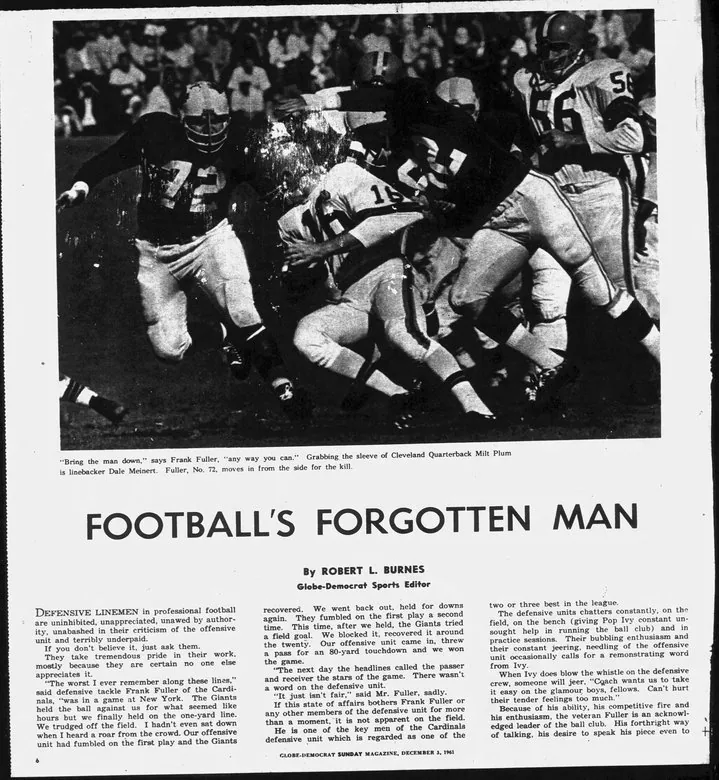
“Football’s Forgotten Man” — 1961
The surviving newspaper, magazine, roster, yearbook, photograph, military, and collectible evidence makes it possible to reconstruct Frank’s career without turning the public exhibit into a research dashboard.
Enter the Evidence Room →